
Every child deserves a chance to embrace the world with confidence and curiosity. But what if the everyday stimuli that seem normal to us become overwhelming challenges for our young ones? Sensory integration challenges can create a world filled with intense lights, confusing sounds, and overwhelming sensations. This is where occupational therapy in pediatric care steps in, acting as a beacon of hope.
Imagine your child, who once recoiled at the touch of water or the hum of a vacuum, now playing joyfully in a splash pad or calmly continuing their activity amid household noises. Occupational therapy at Endeavors Pediatric Therapy Services specializes in helping children with sensory integration issues.
Sensory challenges can make daily routines like dressing, eating, or even playing feel like monumental tasks for your child. Pediatric occupational therapy transforms these challenges into achievable feats by addressing the root causes and teaching coping mechanisms. Our treatments are designed to help kids understand, cope with, and effectively respond to their environment.
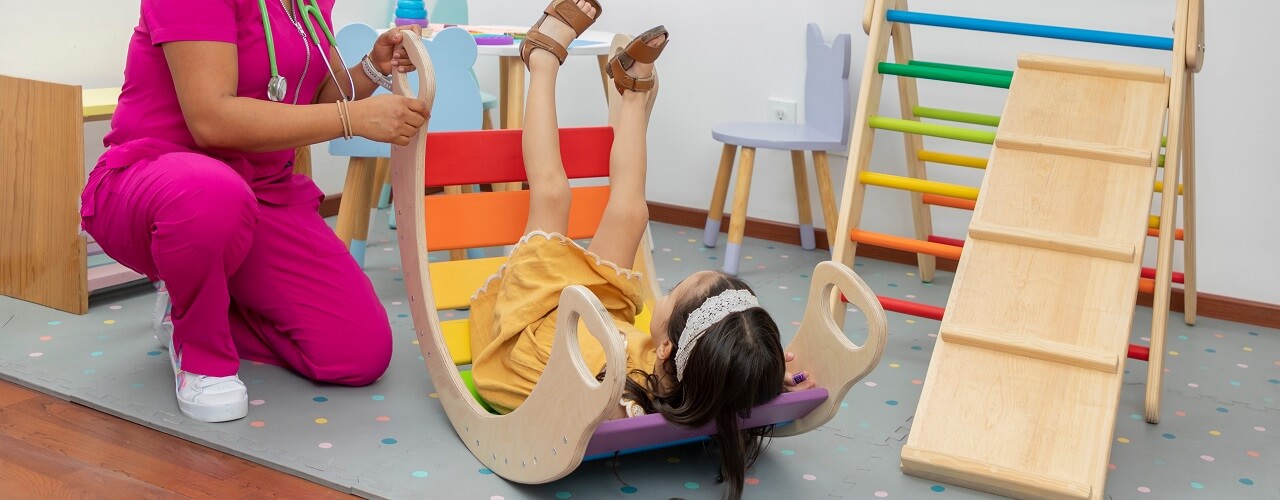
But how does this work? Occupational therapists employ carefully curated activities and exercises tailored to your child’s needs. This could mean using special toys that stimulate specific senses, practicing routines under varying conditions, or introducing textures and sensations in a safe, controlled manner.
Do you see signs of sensory challenges in your child? You don’t navigate this journey alone. Call our clinic today for more information!
Understanding Sensory Integration Disorders: The Role of Occupational Therapy in Pediatric Care
Sensory integration, simply put, is how our brain processes and responds to different sensations it receives. For most children, the rustling of leaves or the touch of soft fabric is just a typical part of their environment. Unfortunately, for some children, these same sensations can be overwhelming or even alarming. This is where occupational therapy in pediatric care comes to the forefront, offering solutions and strategies.
So, what exactly is a sensory integration disorder? Imagine our senses as channels on a TV. For children with this disorder, some channels might be on full volume while others are barely audible. This means they might be overly sensitive to certain stimuli, like loud noises, while being under-responsive or even seeking out other stimuli, like spinning or rocking.
Common signs and symptoms include:
- Overreaction to touch, taste, or sound that others barely notice.
- Difficulty balancing or being clumsy.
- Either a love for spinning and moving or a dislike for it.
- Struggling with fine motor skills like buttoning a shirt or holding a pencil.
- Becoming easily distracted in a noisy environment.
Sensory integration disorders are more common than we think, affecting 5-16% of school-aged children. But here’s the silver lining: many children can adapt and thrive with the right guidance and intervention. We’ll create personalized strategies, making the world more comfortable for these young explorers!
Empowering Your Child: How Pediatric Occupational Therapy Addresses Sensory Integration
Every child deserves the chance to interact confidently with the world around them. This is the very core of occupational therapy in pediatric care, especially when confronting sensory integration challenges. With individualized strategies and a deep understanding of sensory disorders, pediatric occupational therapists create pathways for children to thrive.
Our pediatric OTs will start with a thorough assessment of your child. This includes understanding their sensory triggers, strengths, and areas of challenge. Based on our evaluation, a personalized treatment plan will be crafted and will likely involve:
- Sensory Integration Activities: These are exercises designed to help your child process and react to sensory information more effectively.
- Fine and Gross Motor Skill Development: Helping children master tasks like holding a pencil or climbing a playground.
- Visual-Motor Activities: Connecting what they see with how they move, crucial for tasks like catching a ball or even reading.
- Daily Living Skills: Making everyday tasks, like brushing teeth or dressing, simpler and stress-free.
Occupational therapy doesn’t end in the clinic. Parents and caregivers will receive guidance on exercises and routines they can incorporate at home, ensuring continuity and consistent growth.
At Endeavors Pediatric Therapy Services, we understand that each child is unique. We don’t believe in a one-size-fits-all approach. Our commitment is to find what works best for YOUR child, rooted in evidence and years of expertise, and doing what we can to help your child engage with the world with newfound confidence!
Charting a Path to a Brighter Tomorrow
Every child is a bundle of potential, just waiting to shine. Sensory integration challenges can sometimes cast a shadow, but with the right help, the sun can break through. Occupational therapy in pediatric care offers that ray of hope, illuminating the path to a brighter, more confident future for your child!
If you’ve observed sensory challenges in your child or simply want to learn more, reach out to us today!
Sources:
- https://www.frontiersin.org/articles/10.3389/fnint.2020.556660/full
- https://pubmed.ncbi.nlm.nih.gov/34817594/
- https://pubmed.ncbi.nlm.nih.gov/30839273/
- https://research.aota.org/ajot/article/72/1/7201170010p1/6391/State-of-the-Science-of-Sensory-Integration
- https://research.aota.org/ajot/article/73/3/7303390010p1/6572/Occupational-Therapy-Interventions-for-Children
Tags: occupational therapy, pediactric therapy, heath and wellness, occupational therapy treatment, pediatric care